Tuesday, October 28, 2008

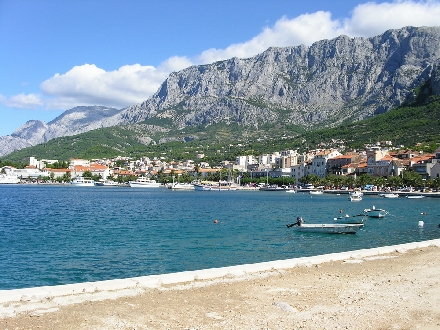
View Nature Between the Adriatic Sea and the Biokovo Mountain


Directly on the Adriatic Sea are the beautiful beaches backed by rich green trees of the Makarska Riviera on the Dalmatian coast of Croatia. It is approximately 60 kilometers in length and a few kilometers in width. The Biokovo Mountain towers over these pebble beaches with their incredible climate of sunshine. Along the coast are settlements running from the Omis Riviera, northwest, to the Neretva Delta, southeast.
With accommodation facilities the Riviera becomes a most popular tourist stop. The old town in Makarska’s center has narrow streets that are stone-paved, a flower and fruit market in the church square, and a sea shell collection in the Franciscan monastery including a giant clam shell. Many hotels in the city are set right off the bay and provide private beaches for their guests. It is a mountain area with an incredible naturalistic view featuring the deep blue sea, intensely green forests and its tempting rocky mountain height. One is placed between the Adriatic Sea and the Biokovo Mountain with its Botanical Garden Kotisina that makes plant life protection and nature conservation possible. In the mountain there are many caves and pits where one might encounter wild muflon, countless bird species and foxes.

Friday, October 17, 2008

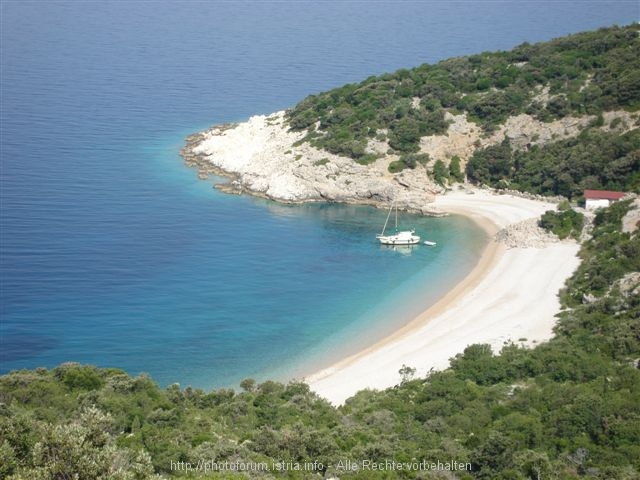
Island Cres - The Hidden Gem of Croatia

Island Cres, Beach in Lubenice
Island Cres with its many coves, lagoons, caves and beaches has always been a favorite vacation spot for the natives of Croatia. Now this island garden spot is gaining the attention of tourists around Europe and the world.
The largest of the Croatian Islands, Cres is a long and mountainous island of with some 248 kilometers of idyllic coastline. Pebble covered beaches on the west and south side invite you to partake of the sea. The north and east sides of the island feature spectacular rocky slopes. A favorite of ecotourists, Cres is home to several endangered species, including the largest of European birds, the Griffon Vulture. The freshwater Lake Vrana supplies the island with drinking water and it is said that one drink will assure your return.
The island has several small hotels, but to experience the culture at its best, consider renting a room. There are also apartments available. Camping and short term apartment rentals will also let you blend into this island paradise. No matter where you stay; museums, gallaries, and ancient collections await you. Then at the end of the day you can lose yourself in the unspoiled natural beauty of this hidden gem.

Thursday, October 16, 2008

Horseback Around Rocky or Flat Beaches in Porec, Istria

Porec
On the western coast of Istria sits a beautiful port of a town filled with Roman architecture. This small town, Porec, offers pine forests and stone pine around the sea in certain spots and allows for an abundance of vegetation and resists unwanted temperatures with summer times without unbearable heat. Home to a bathing beach the town also has a campsite near the south cove. Farming, fishing, fruit and olive growing are the general occupations.
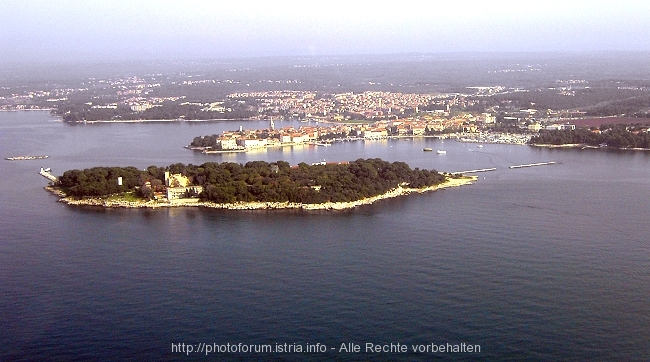
Tourism was begun around 1844 by the steamers society. Once in 1863 the meteorological station was founded, the castle on the islet of St. Nicholas was built by Marquis Polesini. The history of Porec begins long before then and even before the time of the Romans. Porec became the administrative and economic center for the Roman’s colony. From many historical monuments the most important today is Euphrasius Basilica which was built in 6st century. It is Listed as a UNESCO World Heritage Site.
Porec is great for tourism with its many resorts. Brulo is situated in a pine forest above one of Porec’s rocky beaches and has maintained paths for its guests while also including swimming pools and several terraces. For flatter beaches the Zelena Laguna tourist resort is around a forested coast with a recreational center offering horseback riding, jogging trails, basketball, tennis courts, and much more. Boats can be taken from the town to the islet of St. Nicholas known for its rocky coast, well kept beaches and beautiful castle.

Thursday, September 18, 2008

Krka National Park

Krka
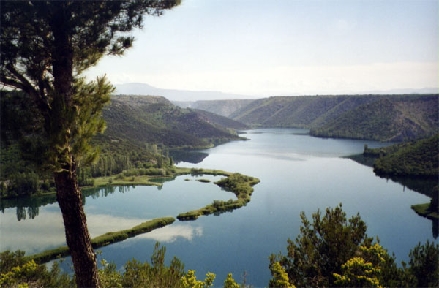
The river Krka is a natural phenomenon that has because of its beauty in 1985 declared as 7th National park in Croatia. National park is consisted of seven travertine falls and possesses rich flora and fauna. Estuary of the river is the sea-sunken and it is 23, 5 km long. It has preserved the purity and biological vitality. Here you can find remains of historical forts and most of them were ruined by the Turks in past centuries. National park has 860 species of plants and most of them are Illyrian-Adriatic endemic species. Among mammals it is important to point out that here is kept 18 species of bats that are threatened with extinction in Europe. This Croatian treasury is visited by people from all over the world.

Wednesday, September 17, 2008

Brijuni National Park

NP Brijuni


Brijuni are an archipelago and a National park in the Adriatic Sea that is consisted of 14 islands and islets. Brijuni are about 6 km distant from Pula, the biggest city of Istria, from where you can embark on ship that connects Brijuni with the land. This archipelago is famous for very mild climate and very rich vegetation. In the National park Brijuni you can find an open type of ZOO where animals are free and not locked in a cages, and there is also a safari park in which can be seen many exotic animals. Trough the history on this islands many world statesmen and aristocrats built their villas. Despite all the natural beauty that have enabled this paradise on earth, Brijuni offers you many sport activities such as riding, playing tennis, sailing, wind surfing, cycling, diving...

Thursday, September 11, 2008

Peninsula of Istria

Istria
Istria is the biggest Croatian peninsula. It is placed on the north of Adriatic Sea and it is consisted of Primorsko-goranska county and Istra county. The most important citys and touristic centers are Medulin, Pula, Rovinj, Poreč, Labin, Rabac, Pazin, Novigrad, Umag but also many other smaller places. Istria is a region of vineyards, olive yards, green country sides, Mediterranean atmosphere and sun. If you are a fan of domestic products, you can come in one of many Istrian agro tourisms and try home made food and drinks and also enjoy in the village. Every season has its charm here. The spring is perfect for bike riding, hiking, walking through the forests, free-climbing, and many other tips of recreation, but also for rehabilitation for those who have health problems. During the summer sea fans come to the beautiful Istrian beaches to enjoy the sun and clean sea. There are also many cultural events such as film festivals, theatre plays, concerts of world know musicians, exhibitions. The autumn is marked as a season of grapes, chestnuts and mushrooms. And there is also a winter with shorter and colder days that are perfect for sitting next to the fireplace, or for visiting one of many thermals.

Tuesday, July 15, 2008

Kvarner

Kvarner Gulf

Kvarner has a population of 323.130 inhabitants. Geographically is settled in Croatia at the 44.77 Northern degrees and 14.43 Eastern degrees. It has settled in the Northern Adriatic bay surrounded by the islands and islets. Kvarner, apropos the city Rijeka is the major Croatian port and economical and tourist route to the whole Croatian coast. Beautiful Mediterranean climate and characteristics have made the prefect natural balance. Fascinating woods and mountains in the hinterland stare at the sea and islands in the bay, showing the mysterious nature in another dimension. Kvarner has the 160 year old tourism tradition and many historical and cultural heritages. The heart of the tradition and history has transmitted through the generations, cherished with love and passion.